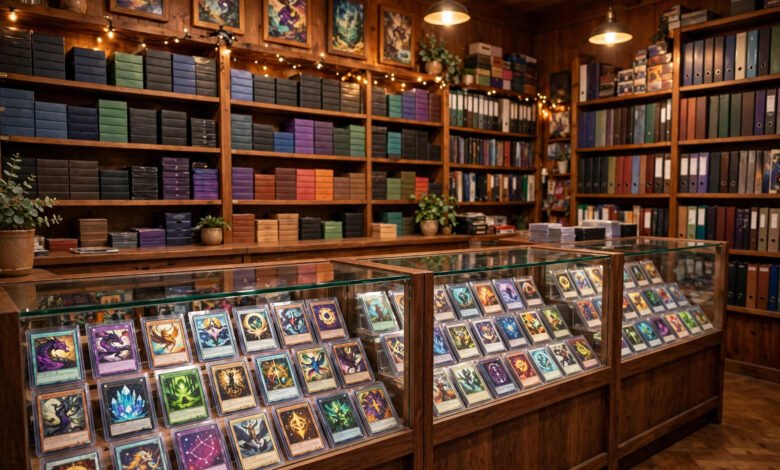
Searching for “card stores near me” can mean two very different things — a trading card shop selling Pokémon, Magic: The Gathering, Yu-Gi-Oh! and sports cards, or a greeting card shop selling birthday, wedding and holiday cards. The best way to find either one is the same: start with a targeted map or directory search, check recent reviews and photos, confirm the shop carries what you collect before you drive there, and judge it on your first visit by how fairly it prices singles and how clearly it explains its buy rates. A good card shop prices singles close to current market value and typically pays 50–70% of market value in cash for cards it wants, according to the card-shop guide CardsNearby.

Card Stores Near Me at a Glance
- Two kinds of “card store”: trading/collectible card shops (sports cards, Pokémon, Magic, Yu-Gi-Oh!, Lorcana, One Piece) and greeting card / stationery shops.
- Best way to find one: a card-shop directory or map search filtered by the game or card type you collect — general map results mix in toy shops and stores that only sell a few packs at the till.
- Signs of a good shop: singles priced near market value, posted or clearly explained buy rates, grading drop-off, regular play events, staff who check cards for fakes.
- Typical buy rates: 50–70% of market value in cash for cards the shop wants, more in store credit (CardsNearby, November 2026).
- Red flags: offers far below half of market value with no explanation, no posted prices, pressure to sell on the spot.
- Also worth knowing: card shows gather many vendors in one room and are a good alternative when no local shop carries what you need.
- Greeting cards: expect roughly $2–$10 for a standard card, more for handmade or custom designs.
What Kind of Card Store Are You Looking For?
Before you search, it helps to know which of the two kinds of card store you need, because they rarely overlap.
Trading card shops sell sealed booster packs and boxes, individual “singles”, accessories such as sleeves, deck boxes and binders, and often buy and trade collections. Many host play nights — Friday Night Magic, Pokémon League, Yu-Gi-Oh! tournaments — and some offer card grading drop-off, sending your cards to a professional grading company. These are hobby shops first and retailers second.
Greeting card shops sell cards for birthdays, weddings, anniversaries, thank-yous and holidays, plus stationery, gift wrap and sometimes gifts. Independent card shops often stock handmade and locally designed cards you will not find in a supermarket, and many offer custom printing or help with wording.
This guide covers both, starting with trading card shops, since that is what most “card stores near me” searches are after.
How to Find Card Stores Near You
1. Search by what you collect, not just “card store”
A plain map search for “card stores near me” will return a mix of hobby shops, comic shops, toy shops and gift shops. Narrow it down: search “Pokémon card shop near me”, “sports card shop near me” or “Magic: The Gathering store near me” and you will get far more relevant results. A great sports card shop may carry no trading-card-game singles at all, and vice versa — so filtering by game matters, as CardsNearby points out in its 2026 guide to finding a reputable card shop.
2. Use a directory built for card shops
Card-shop directories list shops by city with the details a general map listing misses: which games each shop carries, its hours, and services such as buylists, grading drop-off and league play. Some rank shops with a score based on review strength and verified details. For Magic: The Gathering players specifically, the game’s publisher, Wizards of the Coast, runs an official store locator at locator.wizards.com that finds authorised local game stores running official events.
3. Read the listing properly before you drive
A map listing can tell you a lot — if you read past the star rating. The collector guide Collectors Haul recommends checking:
- Photos, and their dates. Interior photos show how much space goes to sealed product versus singles, whether there are tables for play, and how busy the shop looks. Photos from four years ago tell a different story from photos updated last month.
- Categories. Whether the owner lists the business as a trading card store, hobby shop, comic book store or game store hints at what it actually stocks.
- Reviews that name specifics. A review mentioning a set someone found, a trade that went well, or how a first-time visitor was treated is far more informative than a wall of five-word ratings.
- Questions and answers. This is sometimes where you learn whether the shop buys collections or runs events.
4. Check hours and event nights on the shop’s own pages
Posted hours drift, and event nights often live on a shop’s social media rather than its map listing. If the shop runs a league night or prerelease on the day you plan to visit, it may be busy — great for atmosphere, less great if you want a quiet first look or a long conversation about selling a collection.
What Makes a Good Card Shop?
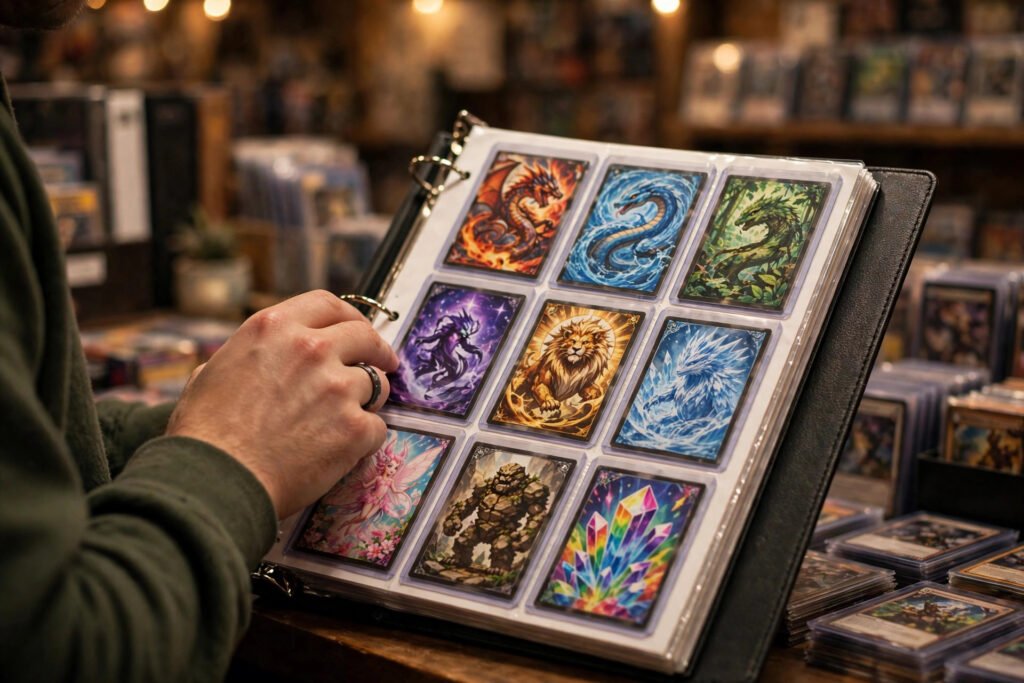
You can usually tell within one visit whether a shop is worth returning to. Here is what to look for.
Fair, transparent pricing
Singles should be priced close to current market value, and staff should be able to show you recent sold prices when you ask. If a card’s market price is easy to check online, a shop charging far above it without explanation is not a shop to trust.
Clear buy rates
A reputable shop posts its buy rates or explains them up front. As a rule of thumb, good shops typically pay 50–70% of market value in cash for cards they want, and a higher percentage in store credit, according to CardsNearby. That margin is how the shop stays in business — it is not a rip-off. An offer far below that range on a valuable card, with no explanation, is a red flag.
Staff who know the hobby
Good staff can talk condition honestly, spot fakes, and tell you what a card sells for before making an offer. They will also tell you when a card is not worth grading, or when a sealed product is a bad buy at its current price. That honesty is worth more than any discount.
Events and community
Regular events — league nights, prereleases, trade nights, tournaments — are a strong sign of an established shop. They also make the shop a community hub rather than just a till: somewhere to play, trade and learn. For many collectors, the events are the main reason to choose a local shop over buying online.
Grading drop-off and other services
Shops that accept grading submissions, run buylists, and stock proper storage supplies (sleeves, top-loaders, binders) are set up for serious collectors. If you plan to grade valuable cards, ask which grading companies the shop submits to and what the turnaround and fees look like.
Red Flags: When to Walk Away
Not every shop deserves your money. Walk away — or at least think twice — if you see:
- Offers well below half of market value on cards the shop clearly wants, with no explanation.
- No prices on singles, so the price depends on who is asking.
- Pressure to sell immediately, or a refusal to let you think about an offer.
- Sealed product that looks tampered with, such as resealed packs or boxes with damaged seals.
- No interest in condition, such as staff handling valuable cards carelessly.
- A listing full of old photos and unanswered reviews, suggesting the shop is no longer actively run.
One bad visit does not always mean a bad shop — everyone has an off day — but a pattern of these signs means your money is better spent elsewhere.
Buying, Selling and Trading at a Card Store
Buying singles
Buying singles in person has one big advantage over buying online: you can see the card before you pay. Check the corners, edges, surface and centring under good light, and ask about the shop’s return policy on singles. Bring a want list — a written list of the cards you are looking for — so you do not forget anything and staff can help you efficiently.
Selling a collection
If you are selling, know roughly what your cards are worth before you walk in. Check recent sold prices for your most valuable cards, and expect a shop offer of 50–70% of market value in cash. Store credit usually gets you a better rate. Sort your cards in advance, keep valuable cards in sleeves, and be realistic: shops buy what they can resell, so bulk commons and damaged cards may be declined or bought only in bulk.
Trading
Trade nights and in-store trading are part of the hobby’s social side. Bring a trade binder with the cards you are willing to part with, agree values using the same price source on both sides, and trade cards of similar value — or make up the difference with cash or extra cards. If you are new to trading values, our guide to trading values in collectible games explains how in-game and collectible trading values work.
Card Shows: The Alternative When No Local Shop Fits
If there is no good shop near you, or you want more choice in one place, card shows gather many vendors under one roof. Shows are listed by state and month in card-show calendars, with dates, venues, admission prices and table counts where the organiser has posted them. A show is a good place to compare prices across vendors, find cards your local shop does not carry, and meet other collectors — though prices at shows can vary as much as prices between shops, so the same advice applies: know the market value before you buy.
Greeting Card Shops Near Me
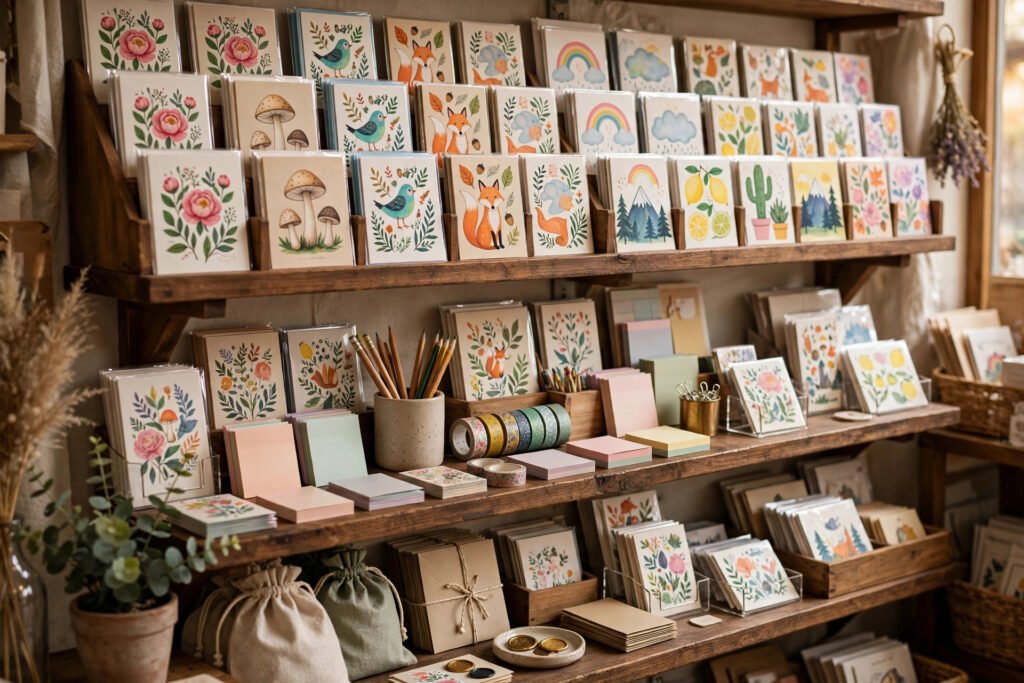
If your search is for greeting cards rather than trading cards, the approach is similar but the details differ. Independent card and stationery shops typically offer a wider and more original selection than supermarkets or chain stores, including handmade cards, local artists’ designs and cards for occasions the big retailers skip.
What to look for in a greeting card shop:
- Range for your occasion. Birthdays, weddings, anniversaries, sympathy, thank-you and seasonal cards — and whether the shop stocks cards in the style you like, from funny to formal.
- Custom options. Many independent shops offer custom printing, personalised messages or made-to-order designs for weddings and big events.
- Help with wording. Good shops will help you find the right words for a difficult card — sympathy, apology, congratulations — which is something no online checkout can do.
- Extras. Envelopes, gift wrap, ribbons and small gifts in the same shop save a second trip.
On price, standard greeting cards typically run about $2–$10, with handmade or custom designs costing more. If you send cards often, ask about multi-buy deals or loyalty offers — many local shops run them quietly.
Tips for Your First Visit to a Card Store
- Call ahead if you are after something specific — a set, a single, a service — and ask whether it is in stock.
- Bring your want list and your trade binder if you plan to buy or trade.
- Bring sleeves and a safe way to carry cards home — a binder, a deck box or at least a rigid top-loader for anything valuable.
- Check the market price of anything expensive on your phone before you pay.
- Ask about events — a league night or trade night is often the fastest way to become a regular.
- Be polite about offers. If a buy offer is lower than you hoped, ask how it was calculated before deciding; a good shop will explain.
Frequently Asked Questions
How do I find card stores near me?
Search by the type of card you collect — for example “Pokémon card shop near me” or “sports card shop near me” — and use a card-shop directory or, for Magic: The Gathering, the official Wizards of the Coast store locator. Check recent reviews, photos and hours before you visit, and confirm the shop carries your game.
What is a fair price for a card at a local card shop?
Singles should be priced close to current market value — check recent sold prices online as a benchmark. When selling to a shop, expect 50–70% of market value in cash, or more in store credit, according to CardsNearby’s 2026 guide. A reputable shop will show you the market price behind its offer.
Do card shops buy collections?
Most trading card shops buy collections, either as individual cards or in bulk. Expect the shop to cherry-pick the valuable cards and offer a bulk rate — or decline — the rest. Call ahead, sort your cards, and know the approximate value of your best cards before you go.
What should I bring to a card shop?
Bring a want list of cards you are looking for, a trade binder if you want to trade, and sleeves or a rigid holder to protect anything valuable you buy. If you are selling, bring your cards sorted and sleeved, and a note of the market prices for your most valuable cards.
Are card shows better than card shops?
They serve different purposes. A good local shop offers convenience, community and events week after week. A card show offers many vendors in one room, which is better for comparing prices and finding unusual cards. Many collectors use both.
How much do greeting cards cost at a local card shop?
Standard greeting cards typically cost around $2–$10, with handmade, artisan or custom-designed cards costing more. Independent shops often stock designs you will not find in supermarkets, and many offer custom printing for weddings and special events.