Ford Transit for Sale: New and Used Prices, Models, and What to Check Before You Buy

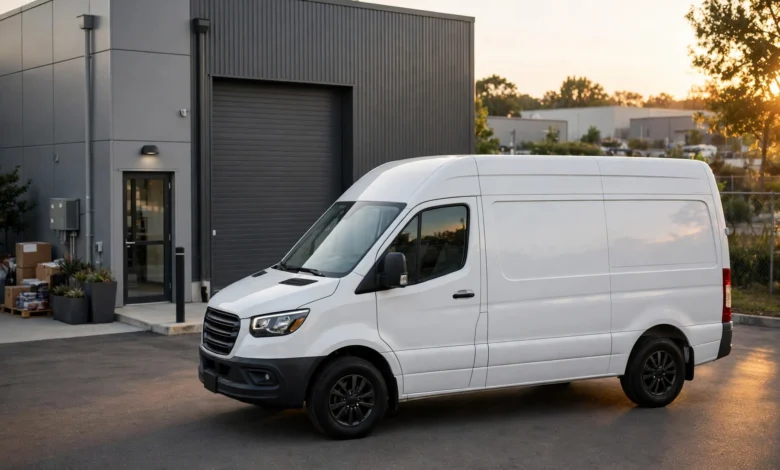
A new 2026 Ford Transit cargo van starts at $48,400 MSRP, and used 2023 cargo vans typically sell for roughly $28,000 to $34,000 depending on model and configuration, according to Kelley Blue Book values as of November 2026. The Transit is America’s best-selling cargo van, per Ford, offered in 37 configurations across cargo van, passenger wagon, cutaway, and chassis cab bodies — which is exactly why buying one takes some homework: the right Transit depends on what you haul, how far you drive, and whether you need seats or cargo space. This guide covers new and used prices, the T-150 through T-350 HD lineup, specs, and what to inspect before you sign.


At a glance: The 2026 Ford Transit cargo van starts at $48,400 MSRP (before destination), with a maximum cargo volume of 487.3 cu ft, maximum payload of 5,103 lbs, and maximum towing of 6,900 lbs (Ford). Passenger wagons seat up to 15. Used 2023 cargo vans run roughly $28,000–$34,000 (Kelley Blue Book Fair Purchase Prices, as of mid-November 2026). An all-electric E-Transit starts at $53,260. Prices as of November 2026.
How Much Is a New Ford Transit?
The 2026 Ford Transit lineup starts at $48,400 MSRP for the T-150 cargo van, before destination charges — MotorTrend’s pricing, which includes destination, starts at $50,795 and runs to $74,060 for a top passenger wagon. Prices climb quickly with roof height, body length, dual rear wheels, all-wheel drive, and the EcoBoost engine, so two Transits on the same lot can be $20,000 apart. Starting prices for the 2026 cargo van range are:
| Model | Starting MSRP (2026) | Best for |
|---|---|---|
| Transit 150 cargo van | $48,400 | Light delivery, service trades, first fleet van |
| Transit 250 cargo van | $51,795 | Heavier daily loads, upfits, courier work |
| Transit 350 cargo van | $52,995 | Maximum single-rear-wheel capability |
| Transit 350 HD cargo van | $54,395 | Heaviest payloads, dual rear wheels, shuttle builds |
| E-Transit cargo van | $53,260 | Urban delivery routes with home-base charging |
Passenger wagons cost more than equivalent cargo vans: Autoblog lists the T-350 passenger van XL (low roof) at $56,680, and a high-roof extended-length T-350 HD XLT with all-wheel drive at $71,165. Kelley Blue Book’s Fair Purchase Pricing suggests buyers are currently paying roughly $1,200 to $3,600 below MSRP depending on trim and equipment, so the sticker price is a starting point for negotiation, not the final number.
How Much Is a Used Ford Transit?
Used Transits are where the value is — commercial vans depreciate faster than most buyers expect. Kelley Blue Book’s Fair Purchase Prices for 2023 cargo vans (medium roof, regular wheelbase), as of mid-November 2026, tell the story:
| 2023 model | KBB Fair Purchase Price | Current resale value | Depreciation in 3 years |
|---|---|---|---|
| Transit 150 cargo van | $27,930 | $26,700 | 37% |
| Transit 250 cargo van | $31,850 | $29,700 | 36% |
| Transit 350 cargo van | $34,410 | $33,400 | 33% |
In plain terms, a three-year-old Transit cargo van costs roughly two-thirds of its original price. That makes a 2023 model a strong buy for a small business — you get the same basic van, the same 3.5-litre V6 drivetrain, and several years of service life for $15,000 or more under a new one. Watch the details, though: values vary by roof height, wheelbase, mileage, and whether the van spent its life as a pampered shuttle or a hard-working delivery vehicle. Always price the specific van on its VIN rather than trusting a model-year average.
Ford Transit Models Explained: T-150 vs. T-250 vs. T-350

The numbers are payload ratings, not trim levels. All three share the same body, engines, and 10-speed automatic transmission; what changes is how much weight the van is rated to carry and tow, and the gross vehicle weight rating (GVWR). Ford rates the Transit range from 8,670 lbs to 11,000 lbs GVWR.
- T-150 — the lightest-duty Transit, suited to parcel delivery, light trades, and camper conversions where the build stays modest. The cheapest way into a new Transit.
- T-250 — the middle step, and the sweet spot for most trades. More payload headroom for tools, parts, and racking without jumping to dual rear wheels.
- T-350 — the heavy single-rear-wheel option for buyers who load close to the limit every day.
- T-350 HD — dual rear wheels and the highest ratings in the range, the choice for shuttle operators, heavy upfits, and cutaway builds.
On top of the payload rating, every Transit is configured by roof height (low, medium, high), body length (regular, long, extended), and drivetrain (rear-wheel or all-wheel drive). That is how Ford reaches 37 configurations — and why two vans with the same badge can have very different cargo volumes, from 246.7 cu ft in the smallest cargo van to 487.3 cu ft in the largest.
Ford Transit Specs: Engines, Payload, Towing, and Cargo
Ford’s official figures for the 2026 Transit (from Ford’s own model-year briefing) are the numbers to trust — they are the manufacturer’s ratings, not a dealer’s estimate:
- Standard engine: 3.5-litre V6, 275 hp and 260 lb-ft of torque
- Optional engine: 3.5-litre EcoBoost twin-turbo V6, 300 hp and 400 lb-ft of torque
- Transmission: 10-speed SelectShift automatic
- Maximum cargo volume (cargo van): 487.3 cu ft
- Maximum payload: 5,103 lbs (gas Transit, when properly equipped)
- Maximum towing: 6,900 lbs (when properly equipped)
- GVWR range: 8,670–11,000 lbs
- Passenger wagon: seats 12 or 15, with up to 461.9 cu ft behind the first row
- Warranty: 3 years/36,000 miles bumper-to-bumper, 5 years/60,000 miles powertrain
The Transit is built at Ford’s Kansas City Assembly Plant in Missouri. For 2026, Ford gave the van a digital refresh inside — the exterior is largely unchanged, but the cabin tech, including SYNC 4 with Apple CarPlay and Android Auto connectivity, moves the game on for drivers who spend all day in the seat.
What About the E-Transit?
The all-electric E-Transit starts at $53,260 and suits a specific buyer: urban delivery and service fleets with predictable daily routes and overnight depot charging. Longer-wheelbase and higher-roof configurations cost more — Kelley Blue Book lists the long-wheelbase low-roof E-Transit cargo van at $55,655. Its maximum payload runs 3,320 to 4,201 lbs depending on configuration — less than the gas Transit’s 5,103 lbs, because the battery pack eats into the weight rating. Before buying one, map your longest real route against the van’s usable range in your climate, and price the charging installation; the van itself is only half the purchase. Ford publishes E-Transit range figures by configuration, and they vary with roof height and load, so verify the number for the exact van you are considering rather than relying on a headline figure.
Where to Find a Ford Transit for Sale
- Ford commercial dealers and Ford Pro — the main route for new vans, and the only place to factory-order an exact configuration. Ford Pro dealers also handle fleet pricing and upfit coordination.
- Used commercial vehicle marketplaces — national listing sites carry the widest used selection; filter by roof height and wheelbase first, because those two choices eliminate most listings that do not fit.
- Fleet and rental sales — former rental and fleet vans are the cheapest used Transits, but they tend to have high mileage and hard use. Price the discount against the wear.
- Auctions — wholesale auctions can be good value for buyers who know vans, but there is usually no warranty and no return, so inspect before you bid.
- Private sellers — often the best-maintained vans, especially camper conversions and owner-operator trades vans, but check the service history carefully.
If you are cross-shopping work vehicles, it is worth comparing the Transit with a pickup-based alternative: our guide to the Chevrolet Silverado 1500 for sale covers a very different kind of workhorse, and for a smaller everyday vehicle our used Toyota Camry for sale guide shows how far a used-car budget stretches in a sedan.
What to Check Before Buying a Used Transit

A Transit earns its living, so its history matters more than its shine. Before you buy:
- Service history and fleet use. Ask for maintenance records. A van with regular oil changes and transmission services at a Ford dealer is worth more than a cheaper van with no paperwork. Fleet vans may have high idle hours that do not show on the odometer.
- Rust underneath. Inspect the frame, rocker panels, and rear door seams, especially on vans from snow-belt states. Surface rust is normal; perforation is a walk-away.
- Transmission behaviour. The 10-speed automatic should shift smoothly under load. Any harsh shifts, hesitation, or warning lights need a diagnostic check before purchase, not after.
- Rear doors and sliding door. Open and close every door. Sagging hinges and sticky sliders are common wear items on working vans and are cheap to spot but annoying to fix.
- Tyres and brakes. Commercial vans eat both. Uneven tyre wear can signal alignment or suspension issues, and a brake job on a heavy van costs more than on a car.
- Upfit condition. If the van has racking, a bulkhead, or a refrigeration unit, check that it is properly secured and that any electrical upfit work is tidy and fused. A badly wired upfit is a fire risk.
- Recall and title check. Run the VIN through the NHTSA recall database and a vehicle history report. A clean title and no open recalls are the minimum.
- A pre-purchase inspection. A Ford dealer or independent commercial-vehicle shop can put the van on a lift for a modest fee. On a $30,000 purchase, it is the best money you will spend.
New vs. Used: Which Transit Should You Buy?
Buy new if you need an exact configuration — a specific roof height, wheelbase, and upfit combination — or if you want the full factory warranty and the latest cabin tech. Buy used if your work does not depend on a rare configuration: a three-year-old Transit at roughly two-thirds of new price leaves budget for racking, signage, and a warranty extension. Businesses should also ask their accountant about Section 179 expensing, which can allow qualifying commercial vehicles to be deducted in the year they are put into service — eligibility depends on how the vehicle is used, so confirm it with a tax professional rather than assuming it applies.
Frequently Asked Questions
How much does a new Ford Transit cost?
The 2026 Ford Transit cargo van starts at $48,400 MSRP before destination charges. The Transit 250 starts at $51,795, the Transit 350 at $52,995, and the Transit 350 HD at $54,395, according to Kelley Blue Book. Passenger wagons start higher, from around $56,680 for a T-350 XL. Prices as of November 2026.
How much does a used Ford Transit cost?
Used 2023 Transit cargo vans have Kelley Blue Book Fair Purchase Prices of $27,930 (T-150), $31,850 (T-250), and $34,410 (T-350) for medium-roof, regular-wheelbase models, as of mid-November 2026. Expect roughly $28,000–$34,000 for a three-year-old cargo van, with price varying by mileage, roof height, and condition.
What’s the difference between the Transit 150, 250, and 350?
They are payload ratings, not trim levels. All share the same body and engines; the T-150 is the lightest-duty, the T-250 is the mid-range workhorse, and the T-350 (and dual-rear-wheel T-350 HD) carry the heaviest loads. GVWR across the range runs from 8,670 to 11,000 lbs.
How much can a Ford Transit tow and haul?
The gas Transit is rated for a maximum payload of 5,103 lbs and maximum conventional towing of 6,900 lbs when properly equipped, per Ford. Cargo volume ranges from 246.7 to 487.3 cu ft depending on roof height and body length. Always check the door-jamb label on the specific van — ratings vary by configuration.
Is there an electric Ford Transit?
Yes. The E-Transit cargo van starts at $53,260 and is aimed at urban delivery fleets with depot charging. Its maximum payload is 3,320 to 4,201 lbs depending on configuration, lower than the gas Transit. Verify range for the exact configuration before buying.
Is the Ford Transit Connect still available?
No. The smaller Transit Connect is no longer sold new in the US, as MotorTrend notes in its 2026 Transit review. Buyers who want a smaller Ford van now have to shop used, or step up to the full-size Transit.
Bottom Line
The Ford Transit remains the default full-size van in America for a reason: 37 configurations cover nearly every commercial job, the 2026 model starts at $48,400, and three-year-old vans at roughly $28,000–$34,000 offer most of the capability for two-thirds of the money. Decide your roof height, length, and payload rating before you shop — those three choices matter more than the badge — and never skip the pre-purchase inspection on a used van. The right Transit is the one that fits your load, your routes, and your budget at the same time.
Sources: Ford Motor Company, “What’s New: 2026 Ford Transit” (Ford From the Road, November 19, 2025); Kelley Blue Book 2026 and 2023 Ford Transit pricing and values (as of mid-November 2026); MotorTrend 2026 Ford Transit review; Autoblog 2026 Ford Transit review and specs. All prices as of November 2026.