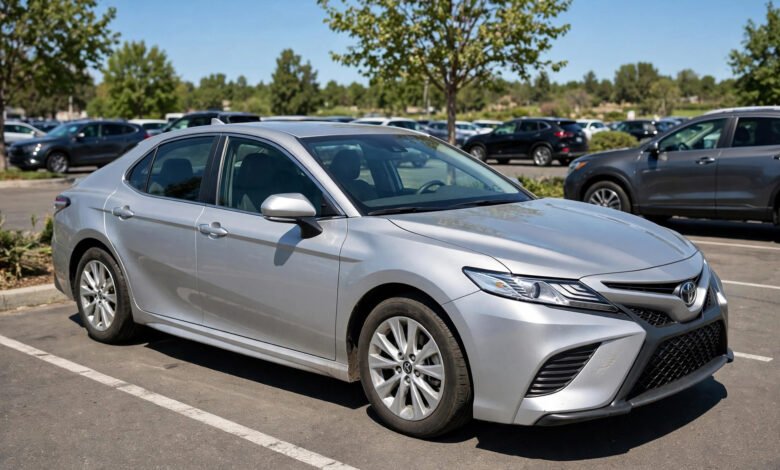
A used Toyota Camry is one of the safest bets in the used-car market. It is reliable, comfortable, fuel-efficient and holds its value well. But prices vary widely by model year, and not every Camry is a good buy. This guide gives you 2026 prices by year, the best model years to target, and a 15-point inspection checklist to use before you hand over any money — as of November 2026.


At a Glance
- Typical 2026 prices: 2018–2020 Camry $17,000–$24,000; 2021–2024 Camry $22,000–$31,000; 2025 Camry $28,000–$35,000 (prices from CarGurus and RoadEthos, September–October 2026).
- Best years to buy: 2021–2024 for the best mix of safety tech, refinement and reliability; 2025 if you want the first hybrid-only Camry.
- Years to be careful with: 2018 and 2019 had some transmission complaints — check the service history closely on those.
- How long it lasts: a well-maintained Camry commonly reaches 200,000–300,000 miles.
- Before you buy: run a vehicle history report, take a test drive, and get a pre-purchase inspection from an independent mechanic.
- Recalls: check any Camry free on nhtsa.gov/recalls using its VIN before you buy.
How Much Does a Used Toyota Camry Cost in 2026?
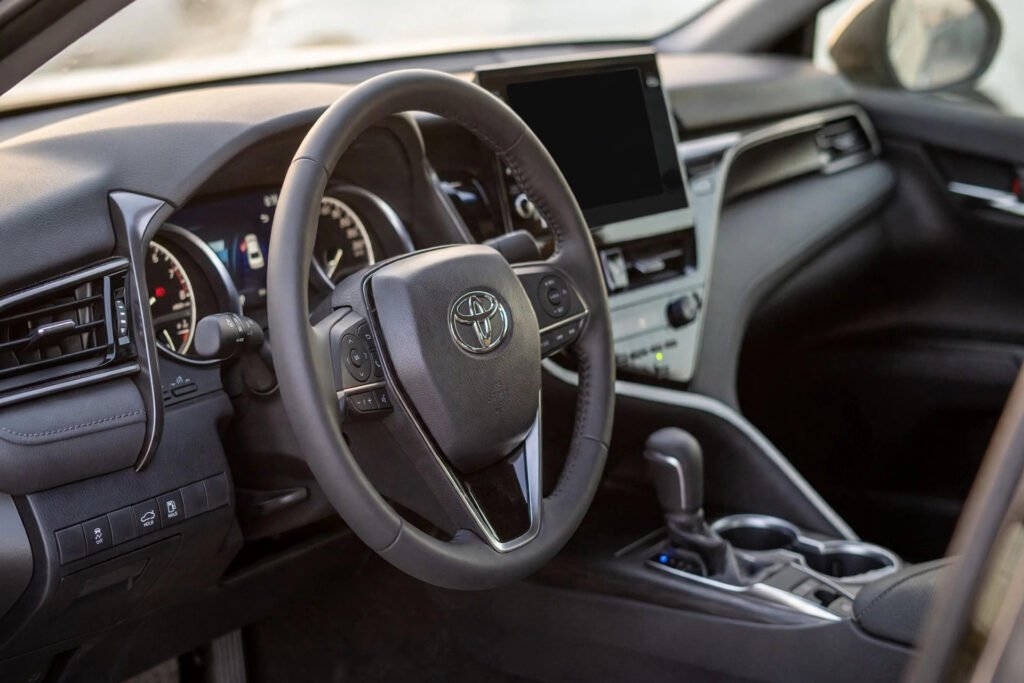
Prices for a used Camry depend mainly on the model year, the trim level, the mileage and where you buy it. The figures below are typical asking prices seen on CarGurus and RoadEthos in September and October 2026, and they are a guide, not a price list — always compare several listings in your area before deciding what is fair.
| Model year | Typical price range (2026) | What you get |
|---|---|---|
| 2018–2020 | $17,000–$24,000 | Eighth-generation Camry; 2.5-litre four-cylinder or 3.5-litre V6; Toyota Safety Sense 2.0 |
| 2021–2024 | $22,000–$31,000 | Refined eighth generation; updated infotainment; Toyota Safety Sense 2.5+; hybrid option |
| 2025 | $28,000–$35,000 | Ninth generation; hybrid-only; 225 hp; up to 51 mpg combined (LE) |
Trim matters as much as year. An LE is the value choice, an SE adds sportier styling, an XLE adds leather and more features, and an XSE is the sporty top trim. A 2023 XSE with low miles can cost more than a 2025 LE. Mileage matters too: a Camry with 30,000 miles will cost noticeably more than the same year with 80,000 miles, but the Camry’s reputation means high-mileage examples still sell well if they have a full service history.
Which Are the Best Years for a Used Toyota Camry?
2021–2024: the sweet spot
The 2021 to 2024 Camry is the best balance of price, features and reliability for most buyers. These cars have Toyota Safety Sense 2.5+, which adds better pedestrian detection and intersection support, a refined version of the 2.5-litre engine, and a more modern infotainment system with Apple CarPlay and Android Auto. Reliability is excellent, and the cars are new enough that many still have some factory warranty left.
2025: the hybrid-only Camry
The 2025 Camry is the ninth generation, and it is hybrid-only: every trim uses a 2.5-litre four-cylinder hybrid system with 225 horsepower (232 hp with all-wheel drive). The LE achieves up to 51 mpg combined, which is remarkable for a midsize sedan. If fuel economy is your top priority and your budget stretches to it, the 2025 is the Camry to buy. Toyota’s own 2025 Camry press release confirms the hybrid-only line-up and the pricing.
2018–2020: the value pick
The 2018 to 2020 Camry is the eighth generation, and it is a good value choice if your budget is tighter. These cars have Toyota Safety Sense 2.0, a choice of a 2.5-litre four-cylinder or a 3.5-litre V6, and the same comfortable ride. The one caution is that some 2018 and 2019 models had transmission complaints — rough shifting and hesitation — so check the service history carefully and pay attention to how the gearbox behaves on your test drive.
What Should You Check Before You Buy?

Use this 15-point checklist on any used Camry, whether you buy from a dealer or a private seller:
- Vehicle history report: run the VIN through Carfax or AutoCheck. Look for accidents, flood damage, salvage titles, odometer discrepancies and service records.
- Recalls: check the VIN free on nhtsa.gov/recalls. Any open recall should be fixed by a Toyota dealer at no cost.
- Engine: look for oil leaks around the valve cover and oil pan, listen for unusual noises on a cold start, and check the oil level and colour.
- Transmission: on your test drive, the shifts should be smooth. Hesitation, harsh shifting or slipping are red flags, especially on 2018 and 2019 models.
- Tyres: check the tread depth and look for uneven wear, which can indicate alignment or suspension problems.
- Brakes: listen for squealing or grinding, and feel for vibration through the pedal.
- Suspension: push down on each corner of the car — it should settle quickly without bouncing. Listen for clunks over bumps.
- Electronics: test the infotainment screen, Apple CarPlay or Android Auto, the air conditioning, all the windows, and the lights.
- Safety systems: check that the Toyota Safety Sense features work — adaptive cruise control, lane departure alert and automatic emergency braking.
- Interior: check the seats, the steering wheel and the pedals for wear that does not match the odometer reading.
- Underbody: look for rust, especially if the car comes from a region that uses road salt.
- Hybrid battery (if applicable): on hybrid models, check the battery health if you can, and ask about the warranty — Toyota’s hybrid battery warranty is 10 years or 150,000 miles on 2020 and later models.
- Test drive: drive at least 20 minutes, including motorway speeds, and listen for wind noise, rattles and vibrations.
- Pre-purchase inspection: pay an independent mechanic £100–£200 to inspect the car on a lift. This is the single best money you can spend.
- Paperwork: make sure the title is clean, the seller is the registered owner, and all the keys are present.
Where to Buy a Used Toyota Camry
You have three main options, and each has trade-offs:
- Toyota dealer (certified pre-owned): the safest option. Certified Camrys pass a 160-point inspection, come with a warranty, and include roadside assistance. You pay more, but you get peace of mind.
- Independent dealer: often cheaper than a Toyota dealer, and a wider selection. Check reviews, and always get your own inspection.
- Private seller: usually the cheapest, but you have no warranty and no comeback if something goes wrong. Only buy privately if you are comfortable with the risk and you get a pre-purchase inspection.
Online platforms such as CarGurus, AutoTrader and Cars.com let you compare prices across a wide area, which is the best way to know whether a listing is fairly priced. If a deal looks too good to be true, it probably is — check the history carefully.
Is the Toyota Camry Reliable?
Yes. The Camry is one of the most reliable midsize sedans on the market, and it has been for decades. Consumer Reports and J.D. Power consistently rate the Camry above average for reliability, and the car’s long-term durability is one of the main reasons it holds its value so well. The 2.5-litre four-cylinder engine is particularly robust, and the hybrid system — in use since 2007 — is well proven.
That said, no car is perfect. The 2018 and 2019 models had the most complaints, mainly about the eight-speed automatic transmission. Later models are much better. Regular maintenance matters more than the model year: a Camry with a full service history and 120,000 miles is a better buy than a low-mileage Camry with no records.
Toyota Camry vs Honda Accord: Which Is Better?
The Camry’s main rival is the Honda Accord, and both are excellent cars. The Camry is generally quieter, more comfortable and slightly more reliable, while the Accord is more engaging to drive and has a roomier rear seat. The Camry’s hybrid system is more fuel-efficient than the Accord’s, but the Accord’s turbocharged engine feels livelier. For most buyers, the choice comes down to personal preference — drive both and see which you prefer. If you are considering a Honda instead, our guide to the 2025 Honda Civic for sale covers another strong option in the same price range.
Frequently Asked Questions
How much does a used Toyota Camry cost in 2026?
It depends on the model year. As of September and October 2026, a 2018 to 2020 Camry typically costs $17,000 to $24,000, a 2021 to 2024 Camry costs $22,000 to $31,000, and a 2025 Camry costs $28,000 to $35,000. Prices vary by trim, mileage, and location.
What is the best year for a used Toyota Camry?
The 2021 to 2024 model years are a strong choice, because they have the latest safety features, a refined engine, and good reliability. The 2018 to 2020 models are also popular for their value, and the 2025 Camry is the first hybrid-only model, which is good for fuel economy.
Is the Toyota Camry reliable?
Yes, the Toyota Camry is one of the most reliable midsize sedans you can buy. It has a long history of dependability, and most owners report few problems. The 2018 and 2019 models had some transmission issues, but later models are very reliable.
What should I check before buying a used Camry?
Check the car’s history with a vehicle history report, inspect the engine and transmission for leaks and noises, check the tyres and brakes, test all the electronics, and take it for a test drive. Also, have a mechanic inspect it before you buy.
How many miles can a Toyota Camry last?
A well-maintained Toyota Camry can last 200,000 to 300,000 miles or more. Many Camrys are still on the road after 15 years. Regular oil changes and maintenance are key to a long life.
Should I buy a used Camry from a dealer or a private seller?
Buying from a dealer is usually safer because you get a warranty and the car has been inspected. Buying from a private seller is often cheaper, but you have less protection if something goes wrong. Always get a pre-purchase inspection, no matter where you buy.