
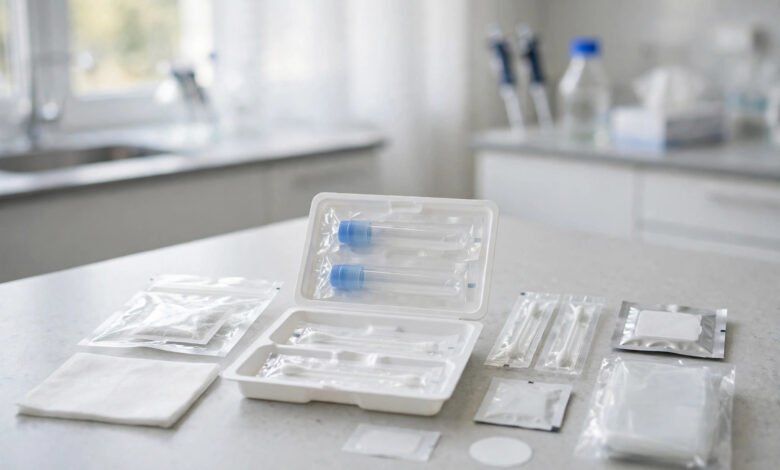
If you are searching for “DNA testing near me”, the most important thing to know is that the right test depends entirely on your reason for testing. Ancestry, paternity, legal, health and prenatal tests are different products, done by different kinds of labs, with different costs, different turnaround times — and, for legal tests, a strict chain-of-custody collection process that an at-home kit cannot provide. Before you book anything, decide what question you need answered, then choose a lab that is accredited (look for CLIA certification and, for relationship testing, AABB accreditation), and confirm whether you need a legal test or an informational one. Prices as of November 2026 typically start around $179 for an at-home paternity test, around $295–$299 for a legal paternity test, and $1,100 or more for non-invasive prenatal paternity testing.


General information only: This article is educational. It is not medical advice, and it does not diagnose or recommend treatment for any condition. For health-related genetic testing, speak to your doctor or a genetic counsellor. No clinic or testing company is endorsed here.
DNA Testing Near Me at a Glance
- Main test types: ancestry, paternity (at-home/informational or legal), family relationship (sibling, grandparent, aunt/uncle), health/clinical genetic testing, and non-invasive prenatal paternity (NIPP).
- At-home vs in-person: at-home kits use a cheek swab or saliva sample you collect yourself; legal tests require witnessed, in-person collection with photo ID and a documented chain of custody.
- Typical starting prices (Nov 2026): at-home paternity ~$179; legal paternity ~$295–$299; relationship tests ~$300+; NIPP ~$1,099–$1,495.
- Accuracy: paternity tests from accredited labs report accuracy above 99.99% for inclusions and exclusions when samples are collected properly.
- Accreditation to look for: CLIA certification, CAP accreditation, and AABB accreditation for relationship testing.
- Turnaround: commonly 2–5 business days after the lab receives samples for standard paternity tests; longer for prenatal and clinical tests.
- Legal protection: the U.S. Genetic Information Nondiscrimination Act (GINA) bars health insurers and most employers from using genetic information against you — but it does not cover life, disability or long-term care insurance.
- Key caution: direct-to-consumer health results generally need confirmation through a healthcare provider before they can be used for medical decisions, according to MedlinePlus Genetics.
What Is DNA Testing?
Genetic testing is a type of medical test that identifies changes in genes, chromosomes or proteins, according to MedlinePlus Genetics, the U.S. National Library of Medicine’s consumer genetics resource. More than 77,000 genetic tests are currently in use. The results can confirm or rule out a suspected genetic condition, help determine a person’s chance of developing or passing on a genetic disorder, establish family relationships, or trace ancestry.
DNA testing is voluntary, and MedlinePlus notes that because testing has benefits as well as limitations and risks, the decision about whether to be tested is a personal and complex one. A DNA test can return unexpected information about family relationships or health risks, so it is worth thinking through the possible outcomes — and who will see the results — before you test.
Types of DNA Tests Available Near You
Ancestry DNA testing
Ancestry (genealogy) tests analyse your DNA to estimate your ethnic origins and find genetic relatives. They are the most common direct-to-consumer tests and are usually done with a saliva sample collected at home and posted to a lab. Ancestry testing is considered a form of direct-to-consumer genetic testing, per MedlinePlus Genetics.
Important limitation: ethnicity estimates are estimates. They can change as reference databases and methods improve, and they describe probabilities about your ancestry, not certainties.
Paternity DNA testing
A paternity test compares DNA from a child and an alleged father to evaluate whether he is the biological father. There are two versions, and the difference matters enormously:
- At-home (informational) paternity test. You collect cheek-swab samples yourself and post them to the lab. Results are for personal knowledge only and are not admissible in court.
- Legal paternity test. Samples are collected in person by a trained collector who verifies photo ID, photographs the participants and documents a chain of custody. The results can be used in court, for child support, custody, inheritance and vital-records matters.
As of November 2026, at-home paternity tests typically start around $179 and legal paternity tests around $295–$299, with the price depending on the number of participants, collection fees and rush processing.
Family relationship testing
When a direct parent-child test is not possible, labs offer relationship tests that evaluate possible sibling, grandparent or aunt/uncle relationships. These tests are less definitive than a direct paternity test, because they compare shared DNA statistically rather than directly. Prices typically start around $300 for at-home options and $399 for legal options.
Health and clinical genetic testing
Clinical genetic testing is ordered through a healthcare provider — a physician, nurse practitioner or genetic counsellor — who determines which test is needed, orders it, collects the sample and shares the results with the patient, as MedlinePlus Genetics describes. Health insurance often covers part or all of the cost when testing is medically indicated.
Direct-to-consumer health tests, bought online or in shops, are different: they use a limited set of genetic variants to estimate risk for certain conditions or report carrier status and traits. MedlinePlus Genetics advises that results from direct-to-consumer companies typically need to be confirmed by additional testing ordered through a healthcare provider before they can be considered diagnostic or used to make medical decisions. Direct-to-consumer testing also generally cannot tell you for certain whether you will develop a specific disease, since most common health problems are caused by a combination of genetic, environmental and lifestyle factors.
Non-invasive prenatal paternity testing (NIPP)
NIPP evaluates possible paternity during pregnancy using a blood sample from the pregnant mother and a cheek-swab sample from the alleged father. It is the most expensive common test, typically starting around $1,099–$1,495, and often requires a deposit.
At-Home Kit or Local Lab: Which Do You Need?
| Your situation | What you need |
|---|---|
| Curious about ancestry or traits | At-home saliva kit |
| Personal knowledge about paternity | At-home cheek-swab kit |
| Court, custody, child support or inheritance | Legal test with in-person, chain-of-custody collection |
| A health question or family history concern | Clinical testing through a healthcare provider |
| Paternity during pregnancy | NIPP, ideally discussed with a healthcare provider first |
The single most common mistake is taking an at-home test and then discovering the results cannot be used for a legal purpose. If there is any chance the results will be needed by a court, an attorney, a child-support office or an agency, choose a legal test from the start — an at-home result cannot be upgraded later.
How to Find a DNA Testing Location Near You
- Decide on the test type first. A lab that does ancestry kits may not offer legal chain-of-custody collection, and a clinical genetics service is a different thing from a paternity lab.
- Search for accredited labs, not just the nearest pin on a map. Look for CLIA certification, CAP accreditation, and AABB accreditation for relationship testing. These are the quality markers MedlinePlus Genetics suggests checking before proceeding.
- Ask exactly what the price includes. Lab fees, collection fees, shipping, tax and rush processing can all be charged separately. Confirm the total before you book.
- Check the collection process for legal tests. A proper legal collection includes identity verification, photographs, witnessed sample collection and documented chain of custody.
- Ask about turnaround time and how results are delivered. Standard paternity results commonly arrive 2–5 business days after the lab receives the samples; prenatal and clinical tests take longer.
- Read the privacy policy. Ask how your DNA sample and data are stored, whether they are shared with third parties, and whether you can request deletion.
If you are comparing local health services generally, the same habits apply: check the provider’s credentials, read recent reviews, confirm what is included in the price, and be wary of anyone who pressures you to decide on the spot. Our guide to finding teeth whitening near you walks through the same kind of local-service checks.
How Accurate Is DNA Testing?

For paternity testing, accuracy is very high when samples are collected properly and analysed by an accredited lab: labs typically report results above 99.99% accurate for both inclusions (the tested man is the biological father) and exclusions (he is not).
For ancestry and health testing, “accuracy” means something different. Ancestry ethnicity estimates are statistical estimates that depend on the size and diversity of the company’s reference database, and they can change over time. Health risk estimates from direct-to-consumer tests cover only a limited set of variants, so a “no variant found” result does not rule out a condition — and a variant found usually needs clinical confirmation.
One important nuance from MedlinePlus Genetics: CLIA certification sets standards for laboratory quality, but — in MedlinePlus’s words — “CLIA standards do not address the clinical validity or clinical utility of genetic tests.” Accreditation tells you the lab is well run; it does not by itself guarantee that a particular test’s results are clinically meaningful.
How Much Does DNA Testing Cost?
Prices vary by test type, the number of people tested, whether legal collection is required, and any rush processing. Indicative starting prices from U.S. testing providers as of November 2026:
- At-home paternity test: from about $179
- Legal paternity test: from about $295–$299
- Relationship tests (sibling, grandparent): from about $300 (at-home) or $399 (legal)
- Non-invasive prenatal paternity (NIPP): from about $1,099–$1,495
- Ancestry kits: often $39–$99, with frequent sale pricing
- Clinical genetic testing: varies widely; often partly or fully covered by health insurance when medically indicated — check with your insurer and provider before testing.
Always confirm whether the quoted price includes the collection fee, lab fee, shipping and tax. Some providers charge a separate collection fee at the appointment, and rush processing can add a significant amount.
DNA Testing, Privacy and the Law

Your DNA is the most personal data there is, so privacy and legal protections deserve attention before you test.
Privacy. Before ordering, check how the company stores your sample and data, whether it shares or sells data to third parties or research partners, whether law enforcement can access it, and whether you can delete your data and destroy your sample. Policies differ widely between companies.
Genetic discrimination. In the United States, the Genetic Information Nondiscrimination Act (GINA), passed in 2008, makes it illegal for health insurance providers and employers to use genetic information to make decisions about a person’s insurance eligibility, coverage, hiring or promotion. GINA has two parts: Title I covers health insurance and Title II covers employment. However, GINA’s protections have limits that MedlinePlus Genetics spells out: they do not apply to employers with fewer than 15 employees, and they do not cover other forms of insurance, such as life insurance, disability insurance or long-term care insurance.
Consent. Testing someone else’s DNA without their consent can be illegal in some jurisdictions, and testing a child usually requires consent from a legal guardian.
Regulation. The U.S. Food and Drug Administration (FDA) regulates some direct-to-consumer genetic tests — you can read the FDA’s own overview of direct-to-consumer tests — but, as MedlinePlus Genetics notes, there is currently little regulation of direct-to-consumer genetic testing services overall, which is why checking a provider’s accreditation and evidence matters.
What Happens at a DNA Testing Appointment?
For an in-person legal test, expect an identity check (bring government-issued photo ID for each adult; a birth certificate for children, with the consenting guardian present), consent and chain-of-custody paperwork with photographs, and a painless cheek-swab sample collected in front of you and sealed and labelled on the spot. Blood samples are used for NIPP and some clinical tests. Results usually arrive by secure online portal, email or post within the quoted turnaround time, with documentation suitable for court use.
For an at-home kit, follow the instructions exactly: do not eat, drink, smoke or chew gum for the period specified before collecting the sample, avoid touching the swab tip, and post the sample promptly.
Questions to Ask Before You Book
- Is the laboratory CLIA-certified, and is it AABB-accredited for relationship testing?
- Is this an informational or a legal test — and if I need a legal test, is chain-of-custody collection included?
- What exactly does the price include, and are there collection, shipping or rush fees?
- How long will results take, and how will I receive them?
- How is my sample stored, can I request its destruction, and is my data shared with anyone?
For a plain-language overview of genetic testing written for the public, the U.S. National Library of Medicine’s MedlinePlus Genetics guide to what genetic testing is is a good starting point.
Frequently Asked Questions
How do I find DNA testing near me?
First decide which type of test you need — ancestry, paternity, legal, health or prenatal — then look for an accredited lab offering that test with in-person collection if you need a legal result. Check for CLIA certification and, for relationship testing, AABB accreditation, and confirm the total price and turnaround time before booking.
How much does DNA testing cost?
As of November 2026, at-home paternity tests typically start around $179, legal paternity tests around $295–$299, relationship tests from about $300, and non-invasive prenatal paternity tests from about $1,099–$1,495. Ancestry kits are often $39–$99. Confirm whether collection fees, shipping and tax are included.
How accurate is a DNA paternity test?
Paternity tests from accredited labs report accuracy above 99.99% for inclusions and exclusions when samples are collected properly. Relationship tests (sibling, grandparent) are less definitive than direct paternity tests because they compare shared DNA statistically. Ancestry ethnicity estimates are statistical estimates and can change as databases improve.
Can I use an at-home DNA test in court?
No. At-home test results are for personal knowledge only and are not admissible in court, because there is no verified chain of custody. If results may be needed for a court, custody, child-support or inheritance matter, you need a legal test with witnessed, in-person collection and photo ID verification.
How long does DNA testing take?
Standard paternity test results commonly arrive 2–5 business days after the lab receives the samples. Ancestry kits can take several weeks including shipping. Prenatal and clinical genetic tests take longer — ask the provider for a specific timeframe before you book.
Is DNA testing private, and can my results be used against me?
Privacy policies differ between providers, so read them before testing: check data sharing, storage and deletion options. In the U.S., the Genetic Information Nondiscrimination Act (GINA) bars health insurers and most employers from using genetic information against you, but it does not cover life, disability or long-term care insurance, or employers with fewer than 15 employees.

