
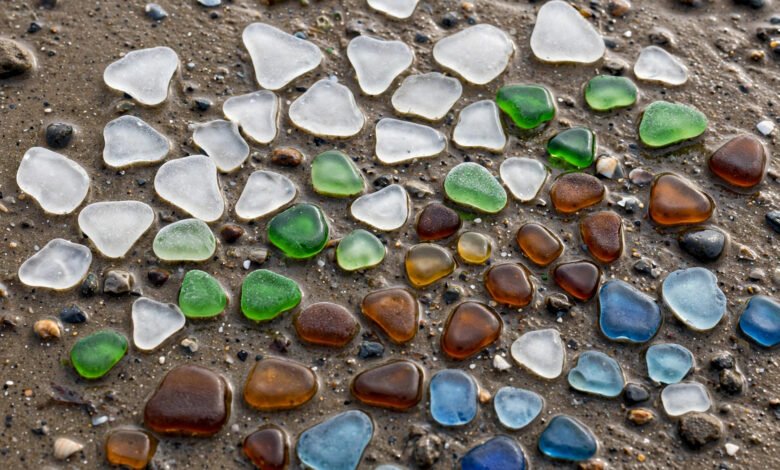
Sea glass is glass that the sea has reshaped. A broken bottle, jar or piece of tableware is tumbled by waves, ground against sand and pebbles, and slowly transformed over years or decades into a smooth, frosted gem. Collectors love it, jewellers set it into necklaces and rings, and beachcombers plan whole holidays around finding it. This guide explains what sea glass is, how it forms, where to find it, which colours are rare, and how to tell genuine sea glass from machine-made imitations — as of November 2026.


At a Glance
- What it is: broken glass naturally tumbled and smoothed by the sea for 20 to 50 years, until its sharp edges disappear and the surface turns frosted.
- Where it comes from: discarded bottles, jars, tableware and other glass objects, mostly from before the age of plastic and recycling.
- Best places to find it: beaches near old towns, harbours and former bottle dumps — Seaham in County Durham, England, and Glass Beach in Fort Bragg, California, are the most famous.
- Rarest colours: orange is the rarest, then red and turquoise or cobalt blue; white, green and brown are the most common.
- How to spot the real thing: soft rounded edges, uneven frosting, tiny pits, and a surface that is very hard to scratch.
- Is it legal to collect? On most public beaches, small amounts for personal use are fine, but check local rules — some beaches are protected.
How Is Sea Glass Formed?
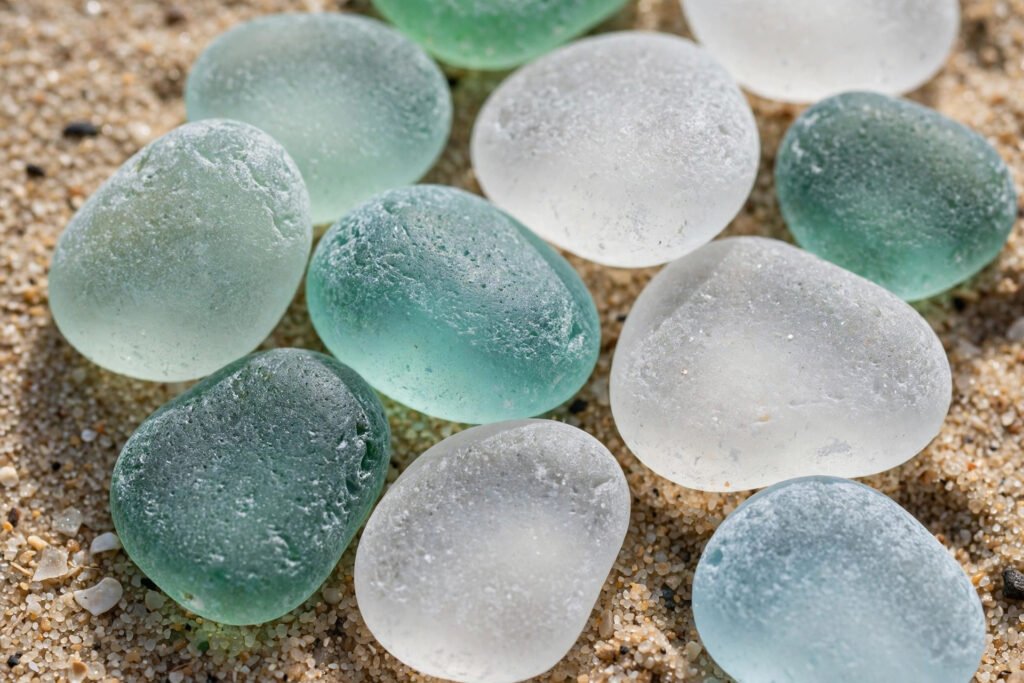
Sea glass starts as ordinary broken glass. A bottle thrown into the sea, or washed into the water from a cliff-top dump, is carried by currents and repeatedly ground against sand, pebbles and other debris. The process has three stages:
1. Breaking and tumbling
The glass breaks into shards. Waves and tides toss the pieces around, knocking the sharp edges off and rounding the corners. This stage alone can take years, and the pieces gradually become smaller and smoother.
2. Chemical weathering
Seawater slowly leaches chemicals out of the glass surface. The glass loses some of its silica and other minerals, which creates the cloudy, pitted texture collectors call “frosting.” The longer a piece sits in the sea, the more frosted it becomes. A piece that has been in the water for decades will have a soft, almost sugary surface, while a piece that has been in for only a few years will still look fairly clear and shiny.
3. Polishing
Fine sand acts like sandpaper, polishing the frosted surface and smoothing the last rough spots. The result is a piece of glass that feels soft in the hand, with no sharp edges at all. Most collectors say true sea glass takes 20 to 50 years to reach this stage, although the exact time depends on the size of the original glass, the strength of the waves, and how abrasive the beach is.
Sea glass is becoming rarer, and the reason is simple: we throw far less glass away than we used to. In the 19th and early 20th centuries, broken glass was routinely dumped into the sea or off cliffs, and that glass is what collectors find today. Modern recycling and plastic packaging mean far less new glass enters the sea, so the best pieces are finite. Glass Beach in Fort Bragg, California, is the most famous example: it was once a town dump where glass was thrown off the cliffs, and decades of wave action turned it into a beach covered in smooth, coloured glass.
What Colours of Sea Glass Are There — and Which Are Rare?
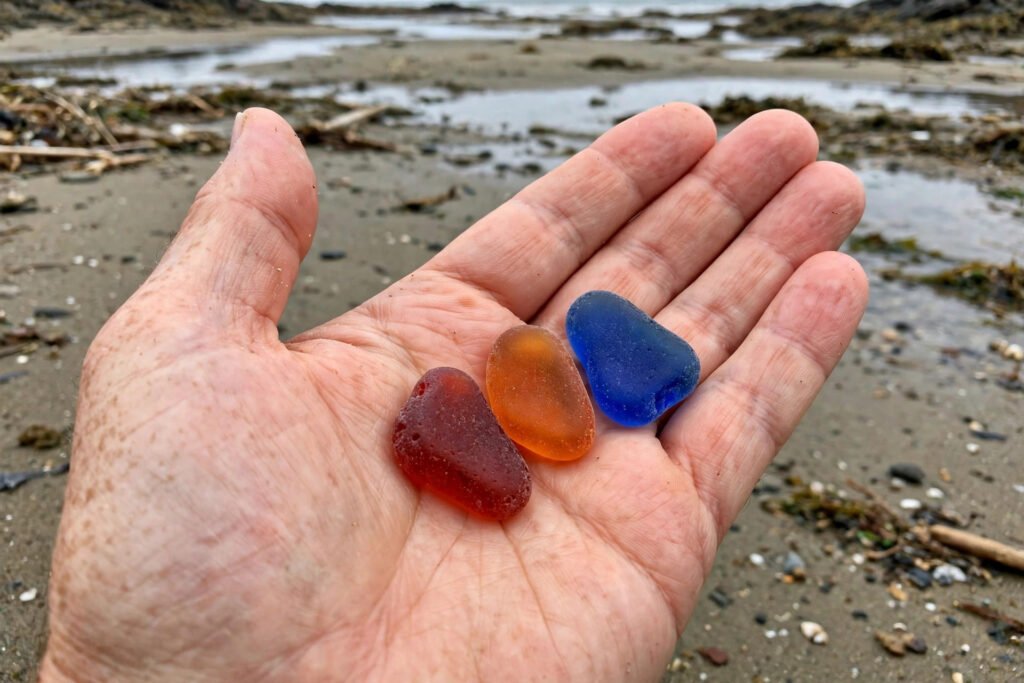
The colour of a piece of sea glass tells you what it was before it became sea glass. The most common colours come from the most common bottles and jars:
- White / clear: the most common colour. It comes from clear bottles, jars and window glass. White sea glass can look almost opaque white when it is heavily frosted.
- Green: very common, from beer, wine and soft-drink bottles. Shades range from pale aqua to deep forest green.
- Brown / amber: very common, from beer bottles and medicine bottles.
- Blue: less common. Pale aqua blue often comes from old medicine bottles, ink bottles and fruit jars, while deep cobalt blue comes from poison bottles and some medicine bottles.
- Turquoise: uncommon, mostly from old glass insulators and some bottles.
- Red: rare. Red glass was expensive to make, so it was used mainly for tableware, art glass and some medicine bottles.
- Orange: the rarest colour of all, according to collectors. Orange sea glass usually comes from old tableware, car tail lights, and a small number of bottles. Finding a piece of orange sea glass is a genuine event for a beachcomber.
- Purple / lavender: unusual and interesting. Clear glass made with manganese as a decolouriser turns purple or lavender after decades of exposure to sunlight, so purple sea glass is usually very old.
- Black: actually very dark green or dark amber, so dark it looks black. It usually comes from old beer or wine bottles.
Rarity is a matter of collector consensus, not a scientific measurement, and prices follow it: a piece of orange sea glass can sell for far more than a piece of white sea glass of the same size. But for most collectors, the joy is in the find, not the value.
Where to Find Sea Glass
The best sea glass beaches share a few features: they are near old settlements, harbours or fishing ports, they have strong tides or waves that tumble the glass, and they have a history of glass being dumped nearby. Here are the most famous:
Seaham, County Durham, England
Seaham is widely regarded as one of the best sea glass beaches in the world. The town was home to the Londonderry Bottleworks, which operated from 1853 to 1921, and glass waste was dumped directly into the sea. The result is a beach rich in sea glass, including the rare multi-coloured pieces Seaham is famous for. The beach is reached from the town centre, and the best hunting is at low tide after a storm.
Glass Beach, Fort Bragg, California, USA
Glass Beach was a town dump from 1906 to 1967, and glass was thrown off the cliffs into the sea. Decades of wave action smoothed the glass into the colourful pebbles that cover the beach today. The beach is now part of MacKerricher State Park, and collecting is restricted — visitors are asked to look but not take. Even so, it is worth visiting to see what decades of natural tumbling can do.
Other good spots
- Barbados and the Caribbean: several beaches, especially near old rum distilleries and ports, are known for green and brown sea glass.
- Japan: beaches near old fishing villages and ports are productive, and Japanese collectors have a long tradition of sea glass hunting.
- The Mediterranean: beaches near old ports in Greece, Italy and Spain can yield sea glass, though strong currents mean the pieces are often smaller.
- Australia: beaches near old settlements in Victoria and New South Wales are known for sea glass, including some unusual colours from old medicine bottles.
Wherever you go, the best time to look is at low tide, especially after a storm, when the waves have churned up new material. Walk slowly along the tideline, and look for the frosted gleam of glass among the pebbles. A small bag, a pair of gloves, and a little patience are all you need.
How to Tell Real Sea Glass From Craft Glass
Because genuine sea glass is becoming rarer, machine-made imitations are now common in shops and online. Craft glass is made by machine-tumbling ordinary glass for a few hours or days, and it is sold as “sea glass” in jewellery and decoration. Here is how to tell the difference:
- Edges: genuine sea glass has soft, rounded edges with no sharp spots at all. Craft glass often has edges that are still slightly sharp or uneven.
- Frosting: real sea glass has an uneven, pitted frosting, with some parts more frosted than others. Craft glass has a more even, uniform frosting.
- Shape: genuine pieces are irregular, with shapes that reflect the original object and the random tumbling of the sea. Craft glass pieces are often more uniform in shape and size.
- Scratches: real sea glass is very hard to scratch, because the frosting is part of the glass itself. Craft glass scratches more easily.
- Colour: genuine sea glass has colours that are slightly muted by decades in the sea. Craft glass colours are often brighter and more saturated.
- Price: if a piece of “sea glass” is very cheap and very perfect, it is probably craft glass. Genuine pieces, especially rare colours, command higher prices.
Wikipedia’s sea glass entry gives a good overview of the history and science of sea glass, including the chemistry of frosting and the history of the most famous beaches.
What Can You Do With Sea Glass?
Sea glass has been used in jewellery and decoration for generations. The most common uses are:
- Jewellery: pendants, earrings and rings, often set in silver or wrapped in wire. The frosted surface and soft colours make sea glass ideal for jewellery.
- Decoration: sea glass is used in vases, jars, mosaics and garden features. A jar of sea glass on a windowsill catches the light beautifully.
- Art: artists use sea glass in mosaics, sculptures and mixed-media work, and some pieces are valuable enough to be collected as art objects.
- Collecting: many collectors simply keep their finds in jars or display cases, sorted by colour, and enjoy the hunt itself.
If you plan to use sea glass in jewellery, wash it gently in warm water with a little soap, and let it dry completely. Do not use harsh chemicals or abrasives, which can damage the frosting. And if you find a piece that is very old or unusual, consider having it identified by a local museum or collector’s society — it may have an interesting history.
Is It Legal to Collect Sea Glass?
On most public beaches in the United Kingdom and the United States, collecting small amounts of sea glass for personal use is allowed. However, some beaches are protected, and some countries have rules against removing natural materials from beaches. Glass Beach in Fort Bragg, California, for example, is in a state park where collecting is restricted. Always check local signs and rules before collecting, and never take glass from a protected or privately owned beach without permission. And remember: sea glass is a finite resource. Take only what you need, leave the rest for others, and enjoy the hunt.
If you enjoy exploring the coast, you may also like the St Erth park and ride, a useful starting point for exploring Cornwall’s beaches and coastal paths.
Frequently Asked Questions
What is sea glass?
Sea glass is broken glass that has been naturally tumbled and smoothed by the sea over years or decades, until its sharp edges are gone and the surface is frosted. It comes from discarded bottles, jars, tableware and other glass objects, and most pieces take 20 to 50 years to form.
How long does sea glass take to form?
True sea glass takes roughly 20 to 50 years to reach the smooth, frosted finish collectors look for. The exact time depends on the size of the original glass, the strength of the waves, and the texture of the sand or pebbles it tumbles against.
Where can you find sea glass?
On beaches near old towns, harbours, fishing ports, and former bottle dumps. In the United Kingdom, Seaham in County Durham is famous for its sea glass, while in the United States, Glass Beach in Fort Bragg, California, is well known. In most places, finding sea glass means walking the tideline after a storm.
What is the rarest colour of sea glass?
Orange is widely considered the rarest colour of sea glass, followed by red and turquoise or cobalt blue. White, green and brown are the most common colours, because they come from the most common bottles and jars.
How do you know if sea glass is real?
Genuine sea glass has soft, rounded edges and a frosted, slightly pitted surface, and it is very hard to scratch. Craft glass is made to look old by machine-tumbling, but its edges are usually sharper, the frosting is more even, and the pieces are often more uniform in shape and colour. Check it in natural light: real sea glass has a soft, uneven frost.
Is it legal to take sea glass from the beach?
On most public beaches in the United Kingdom and the United States, you can collect small amounts of sea glass for personal use. Some beaches are protected, and some countries have rules against removing natural materials. Always check local signs and rules before collecting, and never take glass from a protected or privately owned beach without permission.


