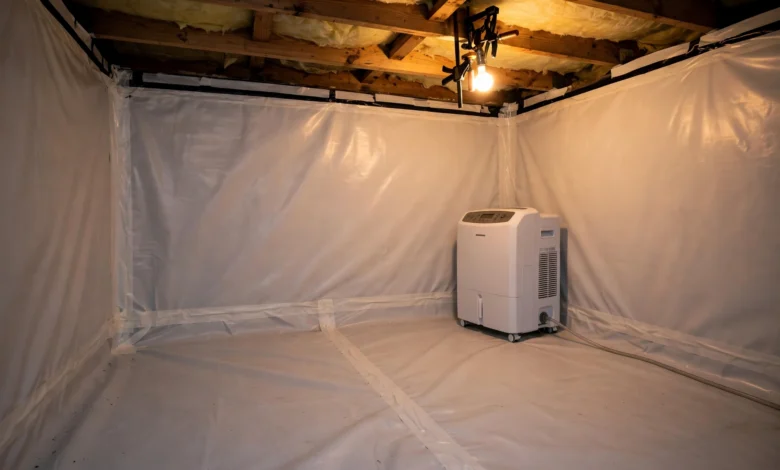
Crawl space encapsulation is the process of sealing the entire crawl space beneath your home — floor, walls, vents, and access points — with a heavy-duty vapor barrier and a dehumidification system, turning a damp, vented cavity into a clean, dry, conditioned space. As of November 2026, a full professional encapsulation in the US typically costs $3–$10 per square foot installed, with a national average project price of about $5,500, according to Angi, HomeAdvisor, and This Old House cost data.

If you are searching for “crawl space encapsulation near me,” you probably already have a reason: a musty smell in the house, sagging floors, or mold on the joists. This guide explains what encapsulation is, what it costs, what the work involves, and how to find a contractor near you who will do it properly.
Crawl Space Encapsulation at a Glance
| Fact | Detail |
|---|---|
| What it is | Sealing the crawl space floor and walls with a heavy polyethylene liner, closing vents, and controlling humidity |
| Typical cost (as of Nov 2026) | $3–$10 per sq ft installed; national average about $5,500 per project |
| Typical project range | $1,500–$15,000 depending on size, condition, and add-ons |
| Liner thickness | 10–20 mil polyethylene for full encapsulation |
| Energy impact | Closed crawl spaces used 15% or more less heating and cooling energy in a US Department of Energy–funded field study |
| Target humidity | Below 60% relative humidity, ideally 30–50% (US EPA guidance) |
| Lifespan | 15–20 years or more for a professionally installed system with maintenance |
What Is Crawl Space Encapsulation?
A traditional crawl space is vented to the outside air. The idea was that vents would let moisture escape. In practice, especially in humid climates, vents let warm, moist air in — and when that air hits the cool surfaces under your home, it condenses.
Encapsulation reverses the approach. Instead of ventilating the crawl space, you seal it completely and control the humidity inside it. A full encapsulation system typically includes:
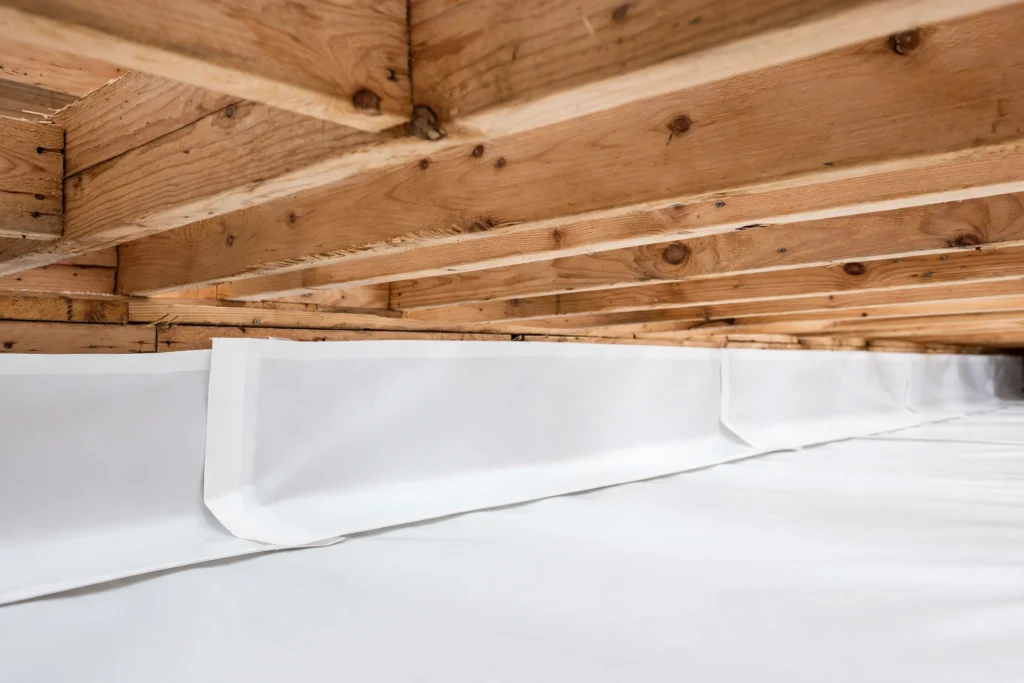
- A heavy-duty vapor barrier — a reinforced polyethylene liner, usually 10–20 mil thick, covering the floor and running up the foundation walls, with seams sealed.
- Sealed vents and gaps — foundation vents closed and sealed, along with gaps around pipes, wires, and the access door.
- Wall insulation — rigid foam board on the foundation walls, keeping the space within the home’s thermal envelope.
- A dehumidifier — a commercial-grade unit sized for the space, draining to the outside or to a sump, keeping relative humidity below 60%.
- Drainage, where needed — an interior drain and sump pump if groundwater is an issue, installed before the liner goes down.
The sealed approach is recognized by building codes. Research from the US Department of Energy’s Building America program shaped the 2009 and 2012 revisions to the International Residential Code (Section R408.3), which allow an unvented, conditioned crawl space in place of open vents — provided the space is sealed, insulated, and given a drying mechanism such as a dehumidifier.
How Much Does Crawl Space Encapsulation Cost Near Me?
There is no single national price, because the cost depends on the size of your crawl space, its condition, your climate, and local labor rates. But published US cost guides converge on a consistent range as of November 2026: Angi and HomeAdvisor both put the national average at about $5,500, with most complete projects falling between $1,500 and $15,000, and HomeGuide’s 2026 figures place professional work at $3–$10 per square foot. A basic floor-only vapor barrier runs $2–$4 per square foot, while a full system with wall liner, insulation, drainage, and a dehumidifier reaches the top of the range.
Typical Cost by Crawl Space Size (as of November 2026)
| Crawl space size | Typical range | Notes |
|---|---|---|
| 500 sq ft | $3,300–$5,000 | Higher per sq ft |
| 1,000 sq ft | $5,300–$8,300 | Most common size |
| 1,500 sq ft | $6,300–$10,000 | Lower per sq ft |
| 2,000 sq ft | $6,300–$10,200 | Best per-sq-ft value |
Ranges reflect published 2026 cost-guide data for a space with common moisture issues. A dry space costs less; standing water or mold costs more.
What Each Component Costs
| Component | Typical cost |
|---|---|
| Vapor barrier / liner (material) | $0.30–$0.70 per sq ft |
| Full liner installation (floor + walls) | $2–$4 per sq ft |
| Crawl space dehumidifier | $1,000–$2,500 installed |
| Interior drainage + sump pump | $1,500–$4,000 |
| Mold treatment / remediation | $1,000–$4,000+ depending on extent |
What Drives the Price Up or Down?
- Size and access. Bigger spaces cost more in total but less per square foot. A low, tight crawl space that workers can only enter on their bellies costs more in labor than one you can crouch in.
- Moisture severity and existing damage. A dry space needs a liner and a dehumidifier. A wet space needs drainage, a sump pump, and possibly mold remediation first — and those add-ons are where quotes diverge most. Rotted joists and damaged insulation must be dealt with before encapsulation, and that prep work is billed separately.
- Liner thickness. A 20-mil reinforced liner costs more than a 10-mil one but is far more puncture-resistant.
- Location. Labor rates vary by region, and humid southeastern states — where encapsulation is most common — tend to have the most competitive markets.
Get at least three written quotes from local contractors, each itemizing the same scope so you are comparing like with like. A quote that is dramatically cheaper than the others usually leaves something out — most often the dehumidifier or the drainage.
What Are the Benefits of Crawl Space Encapsulation?
Moisture and Mold Control
This is the primary benefit and the reason most homeowners encapsulate. A sealed liner stops ground moisture from evaporating into the space, and the dehumidifier keeps the air dry. The US Environmental Protection Agency (EPA) advises keeping indoor relative humidity below 60%, and ideally between 30% and 50%, and notes that the key to mold control is moisture control. A properly encapsulated crawl space holds humidity in that safe band year-round.
Structural Protection
Chronic dampness rots floor joists, sill plates, and subflooring — repairs that can run into five figures if left unchecked. Keeping the wood dry stops rot and discourages the termites and wood-boring insects that prefer damp timber.
Better Indoor Air Quality
A surprising share of the air you breathe upstairs comes from below. Field research using tracer-gas testing has found that roughly 40% of the air in a home with a vented crawl space originates in that crawl space, carried upward by the stack effect. Sealing the space cuts off that pathway.
Lower Energy Bills
The energy savings are measured, not theoretical. In a US Department of Energy–funded field study run by Advanced Energy, a Raleigh-based nonprofit, twelve identical all-electric homes were built in Princeville, North Carolina — four with traditional vented crawl spaces and eight with closed crawl spaces. The houses on closed crawl spaces used, on average, 15% or more less energy for heating and cooling over a year than the vented homes, and the closed crawl spaces stayed substantially drier through the humid season. Savings vary by climate and house, and are largest in hot, humid regions.
Encapsulation vs a Basic Vapor Barrier: What Is the Difference?
Homeowners often confuse the two, and some contractors blur the line. They are different jobs at different prices.
| Feature | Basic vapor barrier | Full encapsulation |
|---|---|---|
| Floor liner | Yes — usually 6 mil plastic | Yes — 10–20 mil reinforced liner |
| Wall coverage | No | Yes — liner sealed up the foundation walls |
| Vents sealed | Sometimes | Yes — all vents and gaps closed |
| Insulation | Usually left between joists | Rigid foam on foundation walls |
| Dehumidifier | No | Yes — sized for the space |
| Typical cost | $2–$4 per sq ft | $3–$10 per sq ft |
A floor-only vapor barrier is a reasonable budget step for a dry crawl space in a mild climate. But if your problem is humid air coming through the vents — which it usually is in humid regions — a floor liner alone will not fix it.
What Does the Encapsulation Process Involve?
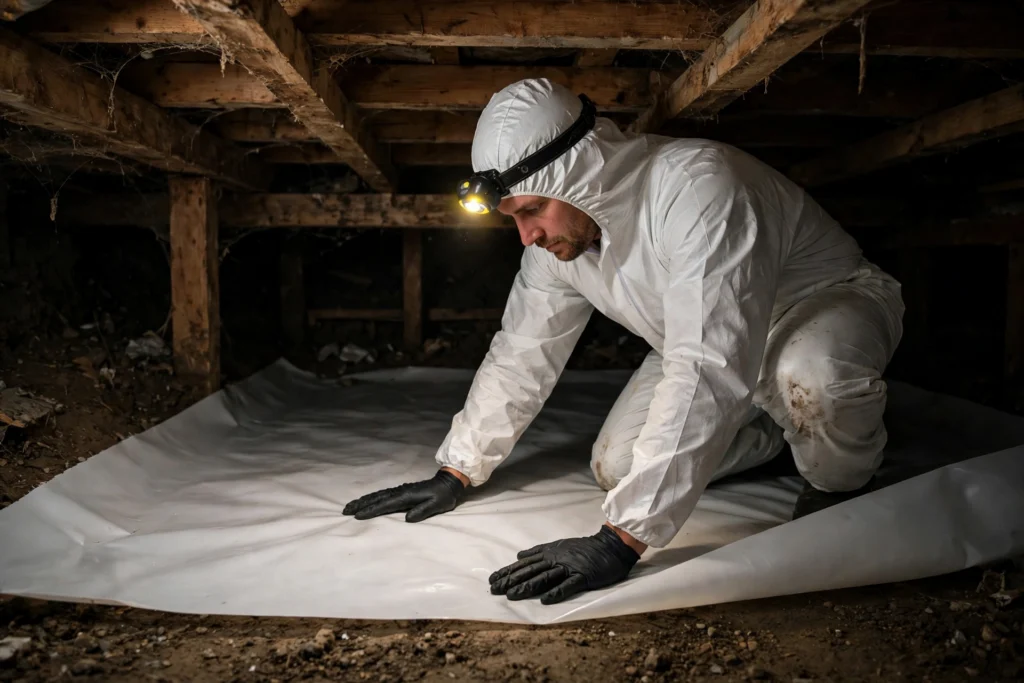
A professional job usually takes one to three days. Here is what happens, in order:
- Inspection. The contractor inspects the crawl space, measures it, checks for standing water, mold, pests, and structural damage, and tests the humidity. A good inspection takes 30–60 minutes and ends with a written report and an itemized quote.
- Clean-out and prep. Debris and old insulation are removed, standing water is pumped out, and mold is treated before anything is sealed in.
- Repairs. Rotted wood is repaired or replaced and plumbing leaks are fixed. Sealing a crawl space over an active leak is a waste of money.
- Drainage (if needed). An interior perimeter drain and sump pump go in before the liner, so groundwater has somewhere to go.
- Sealing vents and gaps. Foundation vents are closed and sealed from the inside, and gaps around pipes, wiring, and the access door are sealed with foam and caulk.
- Liner installation. The polyethylene liner is laid across the floor, run up the foundation walls, and sealed at the seams.
- Insulation. Rigid foam board is fitted to the foundation walls and sealed at the joints.
- Dehumidifier and monitoring. A commercial dehumidifier is installed with a drain line, plus a humidity monitor you can check without crawling in.
- Final check. The contractor verifies the seals, confirms the dehumidifier is running and draining, and explains the maintenance schedule.
How to Choose a Crawl Space Encapsulation Contractor Near You
The contractor matters more than the brand of liner. A sloppy installation — unsealed seams, an undersized dehumidifier, no drainage where water is present — will fail even with premium materials. Use this checklist when comparing local companies:
- Get three itemized quotes. Each should list liner thickness, square footage, insulation type and R-value, dehumidifier model and capacity, drainage scope, and warranty terms. If a quote is a single lump sum with no breakdown, ask for one.
- Check licensing and insurance. Requirements vary by state, but any contractor working in your home should carry general liability insurance and workers’ compensation. Ask for proof.
- Ask about mold and water first. A good contractor inspects for moisture sources and talks about drainage before talking about liners.
- Ask for references and check reviews. Ask for two or three recent local jobs you can verify, and photos of completed work — particularly seam sealing and wall terminations, where cheap jobs show. Check reviews across more than one platform and look for patterns: repeated complaints about callbacks or warranty disputes are telling.
- Read the warranty carefully. Ask what it covers, for how long, whether it transfers if you sell the home, and what maintenance is required to keep it valid.
- Ask who does the work. Some companies subcontract the installation. That is not necessarily bad, but you should know who is actually under your house and who is responsible if something goes wrong.
If old wall insulation is itself part of the damp problem, our guide to cavity wall insulation removal grants covers the help available.
Red Flags to Watch For
- A quote given without an inspection. No one can price encapsulation accurately without seeing the space.
- Pressure to sign today. “This price is only good today” is a sales tactic, not a real deadline.
- A 6-mil liner sold as encapsulation. Thin, unreinforced plastic is a ground cover, not an encapsulation liner. Full systems use 10–20 mil reinforced material.
- No dehumidifier in the quote. Sealing a crawl space without a drying mechanism traps whatever moisture is already in there.
- No mention of drainage. If your crawl space has ever had standing water, encapsulation without drainage will fail.
- Cash-only pricing or no written contract. A proper job comes with a written scope, a warranty, and a paper trail.
Is Crawl Space Encapsulation Worth It?
For most homes with a damp, musty, or humid crawl space, yes — particularly in humid climates. The benefits stack up: mold and moisture control, structural protection, cleaner indoor air, and measured energy savings of 15% or more on heating and cooling in the Department of Energy’s field study. Against that, the payback in energy savings alone can take several years. The strongest case is when you already have a moisture problem: encapsulation usually costs far less than repairing rotted joists and remediating mold later.
For a dry crawl space in a dry climate, a basic vapor barrier and good exterior drainage may be all you need, and a good contractor will tell you so.
Frequently Asked Questions
How much does crawl space encapsulation cost near me?
As of November 2026, expect $3–$10 per square foot installed, with a national average project cost of about $5,500, according to Angi, HomeAdvisor, and This Old House. Most complete projects fall between $1,500 and $15,000. Get three itemized local quotes to find your real number.
How long does crawl space encapsulation last?
A professionally installed system using a 10–20 mil reinforced liner typically lasts 15–20 years or more with basic maintenance — an annual inspection, a dehumidifier filter change, and prompt attention to any punctures.
Is crawl space encapsulation better than a vapor barrier?
For moisture control, yes. A basic vapor barrier covers only the floor and leaves the vents open, so humid outside air still enters. Full encapsulation seals the floor, walls, and vents and adds dehumidification.
Does encapsulation really save energy?
Yes — the savings are measured. In a US Department of Energy–funded field study of twelve identical homes in North Carolina, houses with closed crawl spaces used 15% or more less energy for heating and cooling than identical homes with vented crawl spaces. Savings are largest in hot, humid climates.
Do I need a permit for crawl space encapsulation?
It depends on your local building code. Many jurisdictions require a permit for converting a vented crawl space to an unvented one. A reputable local contractor will know the requirements in your area and handle the permit as part of the job.
Can I encapsulate my crawl space myself?
A handy homeowner can install a basic floor vapor barrier, but full encapsulation — sealed wall liners, rigid foam insulation, drainage, and a correctly sized dehumidifier — is specialist work. Mistakes such as unsealed seams or sealing over an active water problem can make moisture worse rather than better.